A four year old stands at the top of the grassy hill, arms out, working something out. Run or roll? She looks at the slope, looks at her friend already at the bottom, and goes for it at full speed. Halfway down her legs get ahead of her and she lands on her knees, laughing. Then she climbs back up to do it again, a little slower this time. Nobody told her to slow down. She worked it out herself.
That small decision is the whole case for risky play. This guide explains what it is, why early childhood educators value it, how it is kept safe and how you can support it at home.
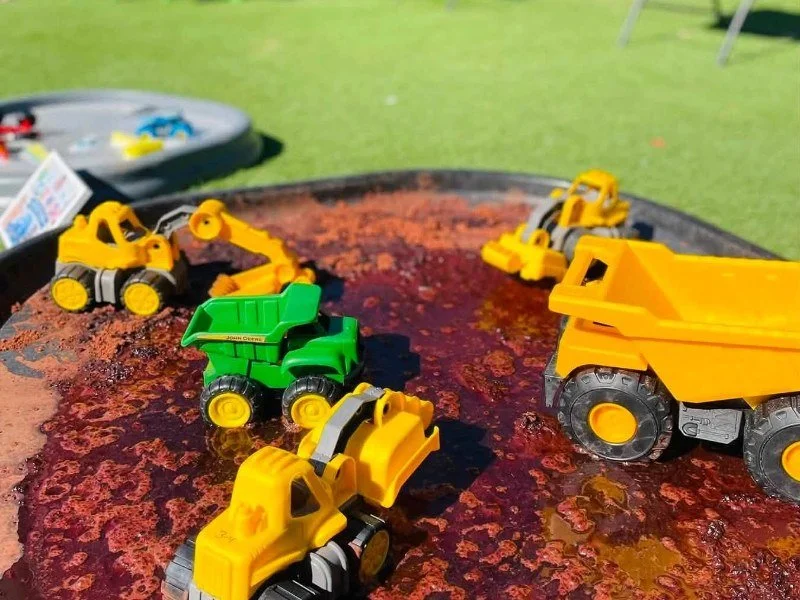
Why Risky Play Matters So Much in the Early Years
Risky play is play that is exciting and a little uncertain, where a child tests what their body can do. It is a recognised part of early childhood practice in Australia, and the national Early Years Learning Framework describes outdoor learning spaces that invite physically active play and risk-taking.
It can be uncomfortable to watch. But a childhood with every challenge removed leaves children without practice at the one skill that keeps them safe for life: judging risk for themselves. A child who has never climbed does not know how high is too high.
The useful distinction is between a risk and a hazard. A risk is a challenge a child can see and choose, like how high to climb or how fast to run. A hazard is a danger they cannot see or judge, like a broken rung or a sharp edge hidden in the sand. Our job is to remove hazards and keep the risks.
Judgement: children learn to look, think and decide before they act.
Confidence: doing something that felt scary last week is powerful proof of their own ability.
Physical skill: balance, strength, coordination and spatial awareness all grow through challenge.
Resilience: small tumbles teach children to get up, adjust and try again.
Managing feelings: children practise handling fear and excitement in small, safe doses.
Focus: a child working out how to cross a beam is concentrating as hard as they ever will.
The Types of Risky Play
Early childhood researchers commonly describe several kinds of risky play. You will recognise most of them from your own childhood.
Height: climbing, balancing up high, jumping down.
Speed: running flat out, rolling down a hill, swinging high, riding fast.
Rough and tumble: wrestling, chasing and play fighting with friends who have agreed to the game.
Tools: using real tools, such as a hammer or a peeler, with close supervision.
Getting out of sight: hiding in a cubby or behind a bush, with the thrill of being "alone".
Not every type suits every age or every setting, and educators choose what they offer with care. What the types share is that the child is in charge of how far to go.
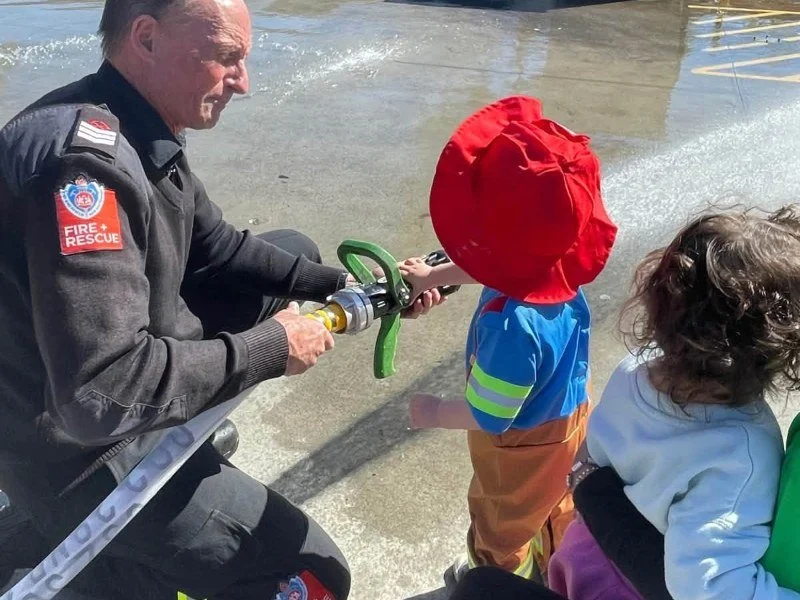
What Risky Play Looks Like at Redfern Cottage
Our outdoor space in Minto was made for this kind of play. There are grassy hills to run and roll down, climbing frames to scale, a large sandpit to dig and jump in, and a cubby house that becomes a lookout, a castle or a fire station depending on the day.
Children under two have their own separate outdoor area. For a baby, risky play is pulling up on a low ledge, crawling up a gentle slope or letting go for a first wobbly step. Having their own space means the youngest children can take those risks at their own level, without bigger bodies rushing past.
Through Redfern in Motion, our physical activity program, educators set up obstacle courses and games built around jumping, running, balancing and coordination. In Redfern Mini Makers Club, children build and experiment with blocks, natural materials and simple tools, which brings its own kind of careful risk.
What you will notice is how educators behave. They stay close, they watch, and they hold back. Instead of "Be careful!", which tells a child nothing, you will hear "Where will your foot go next?" or "What is your plan for getting down?".
How Educators Keep Risky Play Safe
Supporting risky play is not the same as stepping back. It takes more attention from adults, not less. Equipment and surfaces are checked, the space is supervised at all times, and educators know each child well enough to judge when to step in and when to wait.
A few simple principles guide good practice.
Children climb only as high as they can get by themselves. A child who is lifted onto a platform has not judged the height and may not be able to get down.
Educators help children plan, not perform. They talk through the next move instead of doing it for the child, so the child stays in control of their own body.
Every child sets their own pace. Nobody is pushed to try something they are not ready for, and nobody is held back from a challenge they have earned.
And when a child does take a tumble, as children do, the response is calm: comfort, a check, and then a conversation about what they might try differently.
What Children Learn When It Goes Wrong
The scraped knee at the bottom of the hill is part of the lesson. It is feedback, delivered at a scale a child can handle. She learnt that the slope is steeper than it looks and that her legs have a top speed. She also learnt that falling over is survivable, that a cuddle helps, and that she can choose to go again.
Children who get this practice in small doses tend to be more careful, not less, because their caution is based on experience. Children who never get it have to learn the same lessons later, when they are bigger, faster and further from an adult.
Bringing It Home
Risky play does not need special equipment. It needs time, space and a bit of nerve from the adults.
At the park, wait a few seconds before you help. Often they solve it.
Swap "Be careful" for a question: "What can you hold on to?"
Let them walk along a low wall, balance on a log or jump off the bottom step.
Say yes to puddles, mud and getting dirty.
Let them carry something a bit heavy or help with a real job in the garden.
Notice your own reaction. If you gasp, they learn that the world is frightening.
Frequently Asked Questions
Is risky play safe? It is not risk free, and it is not meant to be. With hazards removed and close supervision, the bumps are small and the benefits are large.
What age does risky play start? From babyhood. A baby pulling up on furniture is taking a risk. The challenge simply grows with the child, from a first step to the top of the climbing frame.
What if my child is very cautious? That is fine. Cautious children are good risk assessors. Let them watch, offer small steps and celebrate each one. Confidence built slowly is still confidence.
Growing Brave, One Step at a Time
Risky play is how children find out what they are capable of, and learn to look after themselves in the process. Our role, as parents and educators, is to make the space safe enough and then trust them with the rest.
If you would like to see our outdoor space and watch it in action, get in touch with our team to arrange a visit.