A basket of pine cones, a pile of cardboard tubes and a length of blue fabric sit on the mat. Within minutes the fabric is a river, the tubes are a bridge and the pine cones are, apparently, a family of echidnas who need to get across. Ten minutes later the same tubes are telescopes. Nobody showed the children what to do with any of it, and that is exactly why it works.
This guide explains what loose parts play is, why educators value it, what to offer at each age and how to set it up at home for next to nothing.
Why Loose Parts Play Matters So Much in the Early Years
Loose parts are materials with no fixed purpose. They can be moved, carried, lined up, stacked, combined, pulled apart and put back together in endless ways. The idea is usually credited to architect Simon Nicholson, who argued in the 1970s that the more movable pieces an environment offers, the more inventive the people in it become.
A toy fire engine is always a fire engine. A cardboard box can be a fire engine before lunch and a shop after it. Because loose parts do not tell a child what to do, the child has to supply the idea, and that is where the learning sits. There is also no right answer, which means there is no way to get it wrong. For children who are wary of making mistakes, that freedom matters.
Creativity: children invent the purpose, the story and the rules.
Problem solving: making a bridge stay up takes testing, failing and trying again.
Early maths: sorting, counting, comparing sizes and making patterns happen naturally.
Language: new ideas need explaining, and shared games need negotiating.
Fine motor skills: picking up, threading, balancing and fitting build control in small hands.
Concentration: open-ended materials hold attention far longer than a toy with one function.
What Counts as a Loose Part?
Almost anything, as long as it is safe and can be used in more than one way. It helps to think in groups.
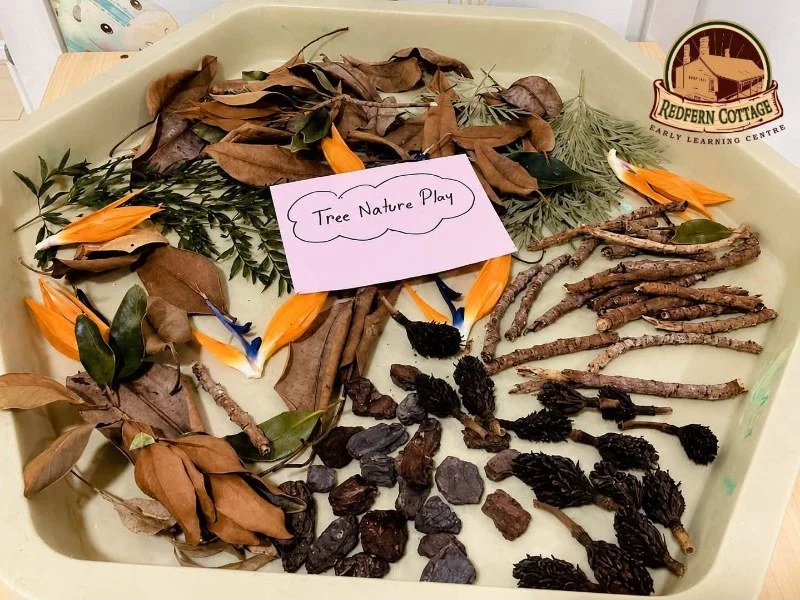
Natural: sticks, stones, shells, leaves, seed pods, pine cones, bark, sand, water.
Recycled: boxes, tubes, lids, egg cartons, bottle tops, corks, fabric offcuts.
Household: pegs, wooden spoons, bowls, scarves, curtain rings, keys.
Construction: blocks, planks, crates, tyres, pipes, guttering.
What they have in common is that none of them comes with instructions. Variety matters more than quantity: different textures, weights, shapes and sizes give children more to think about.
What Loose Parts Play Looks Like at Redfern Cottage
You will see loose parts across our rooms and outdoors.
In Redfern Mini Makers Club, our STEM program, children build and experiment with blocks, natural materials and simple tools. They might test how tall a tower can go before it falls, which objects roll fastest down a ramp or how to make a pattern repeat. These are engineering and maths questions, asked and answered by the children themselves.
In the sandpit, buckets, pipes and scoops turn digging into a building site. Add water and the questions change again: where does it go, how do we stop it, what happens if we dig here?
Through Redfern Earth Heroes, our sustainability program, children learn about recycling and reuse, and clean recycled items such as boxes, lids and tubes can get a second life as building materials. Children see for themselves that something headed for the bin can become something useful, which is a far more convincing lesson about reuse than being told.
Educators set out materials as an invitation and then watch what happens. They might add a new element, ask "What else could that be?" or simply write down the story a child tells about their creation.
Loose Parts for Every Age
Loose parts suit every age group, with the materials chosen to match.
Babies explore with their hands and mouths, so they need large, safe objects: wooden rings, fabric squares, big smooth shells, metal bowls and spoons. A basket of these, often called a treasure basket, can hold a baby's attention for a surprisingly long time. They are learning about weight, texture, temperature and sound.
Toddlers love to fill, tip, post and carry. Boxes, tubes, large lids, pegs and containers with openings are ideal. Expect a lot of transporting from one place to another. It looks like mess. It is a toddler investigating how the world fits together.
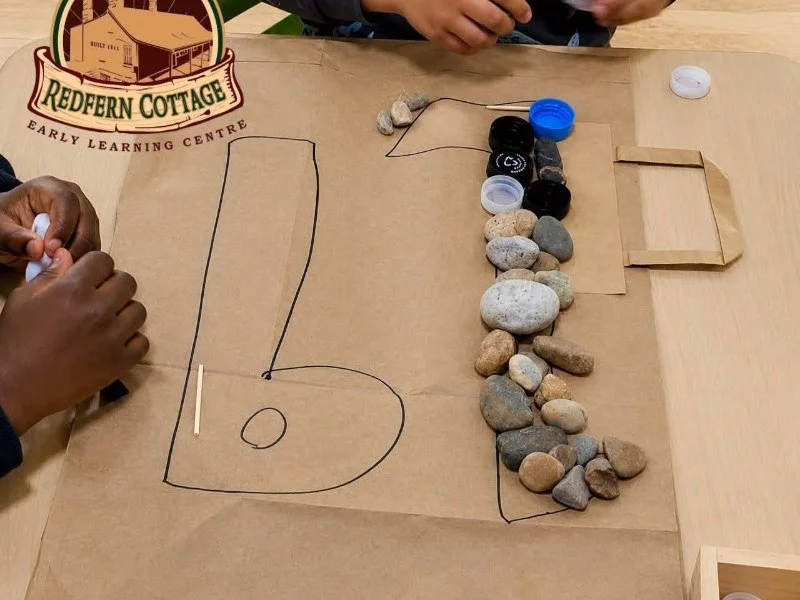
Preschoolers are ready for smaller pieces and bigger plans: stones, sticks, buttons, corks, bottle tops, fabric, tape and string. They build, design, make patterns and tell long stories about what they have made. This is also when children start to plan ahead and work on a project together over several days.
Small pieces are a choking risk for children under three, so they are kept for older rooms and always supervised.
The Adult's Role: Set Up, Then Step Back
Loose parts play asks adults to do something that does not come naturally, which is very little.
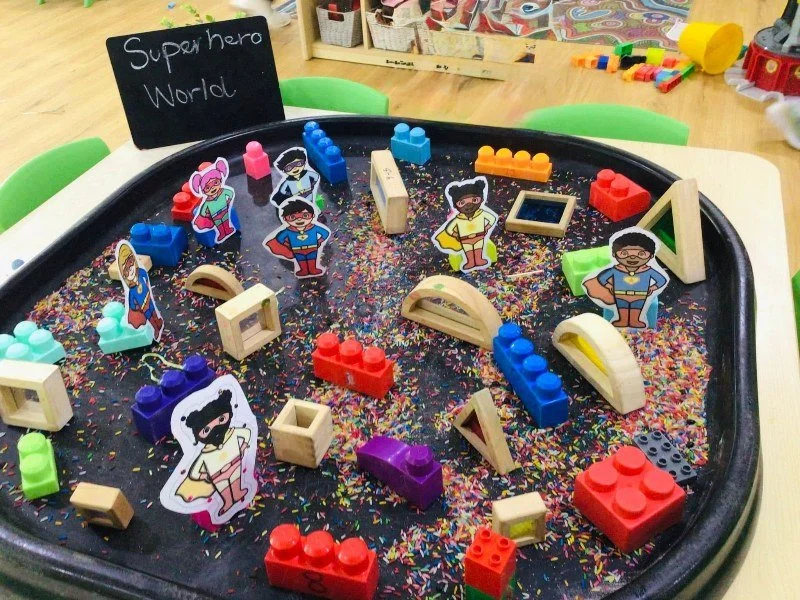
The work is in the setting up. Offer a small, interesting selection instead of everything at once. Present it attractively in baskets or trays so children can see what is there. Give the play enough room and enough time.
Then watch. Resist showing how it is done, because the moment an adult builds "a house", every child builds a house. If you want to join in, describe what you see ("You have lined up all the long ones") or wonder aloud ("I wonder what would happen if...").
Finally, accept the mess. Tidying up is part of the play and a sorting activity in its own right. Children who know where things live can pack away with surprising care.
Bringing It Home
You already own a loose parts collection. It is in the recycling, the kitchen drawer and the garden.
From the recycling: boxes, tubes, egg cartons, clean lids.
From the kitchen: wooden spoons, measuring cups, a muffin tray for sorting.
From outside: sticks, leaves, stones, gumnuts, shells.
From the cupboard: scarves, pegs, ribbons, old keys.
Store them in open baskets at child height and swap a few items each week.
Collect on walks. A bag of treasures from the park is worth more than a new toy.
Check items for sharp edges, and keep anything small away from children under three.
Frequently Asked Questions
What is loose parts play? It is play with open-ended materials that have no set use, so children decide what they become and how to use them.
What age is loose parts play for? All ages. Babies explore large, safe objects with their senses, toddlers fill and carry, and older children use smaller pieces for building, design and storytelling.
Are loose parts safe? Yes, with materials matched to the child's age and close supervision. Avoid small items for under threes and check everything for sharp edges or splinters.
Simple Things, Big Ideas
Loose parts remind us that children do not need more toys. They need materials that leave room for their own ideas, and adults willing to wait and see what those ideas turn out to be.
If you would like to see open-ended play in our rooms, get in touch with our team and come for a visit.