Checking In, Reaching Out: How Redfern Cottage Nurtures Emotional Wellbeing
Feelings Are Part of Every Day
At Redfern Cottage Early Learning Centre in Minto, we see emotional wellbeing as the starting point for everything else. Children who feel safe, understood and connected are the ones who feel brave enough to try new things, make friends and cope with the ups and downs of a busy day.
The Early Years Learning Framework (EYLF) puts a strong sense of wellbeing at the heart of early learning, and our educators build it into routines, conversations and play rather than saving it for a single lesson.
Belonging: Children who feel known by their educators settle more easily and explore with confidence.
Emotional language: Having words for feelings gives children a way to ask for help instead of acting out.
Empathy: Noticing how a friend feels is the beginning of kindness and cooperation.
Communication: Children learn there are many ways to express themselves and connect with others.
Confidence: Feeling understood helps children speak up, share ideas and take healthy risks.
Belonging Starts in the Tiny Wanderers Room
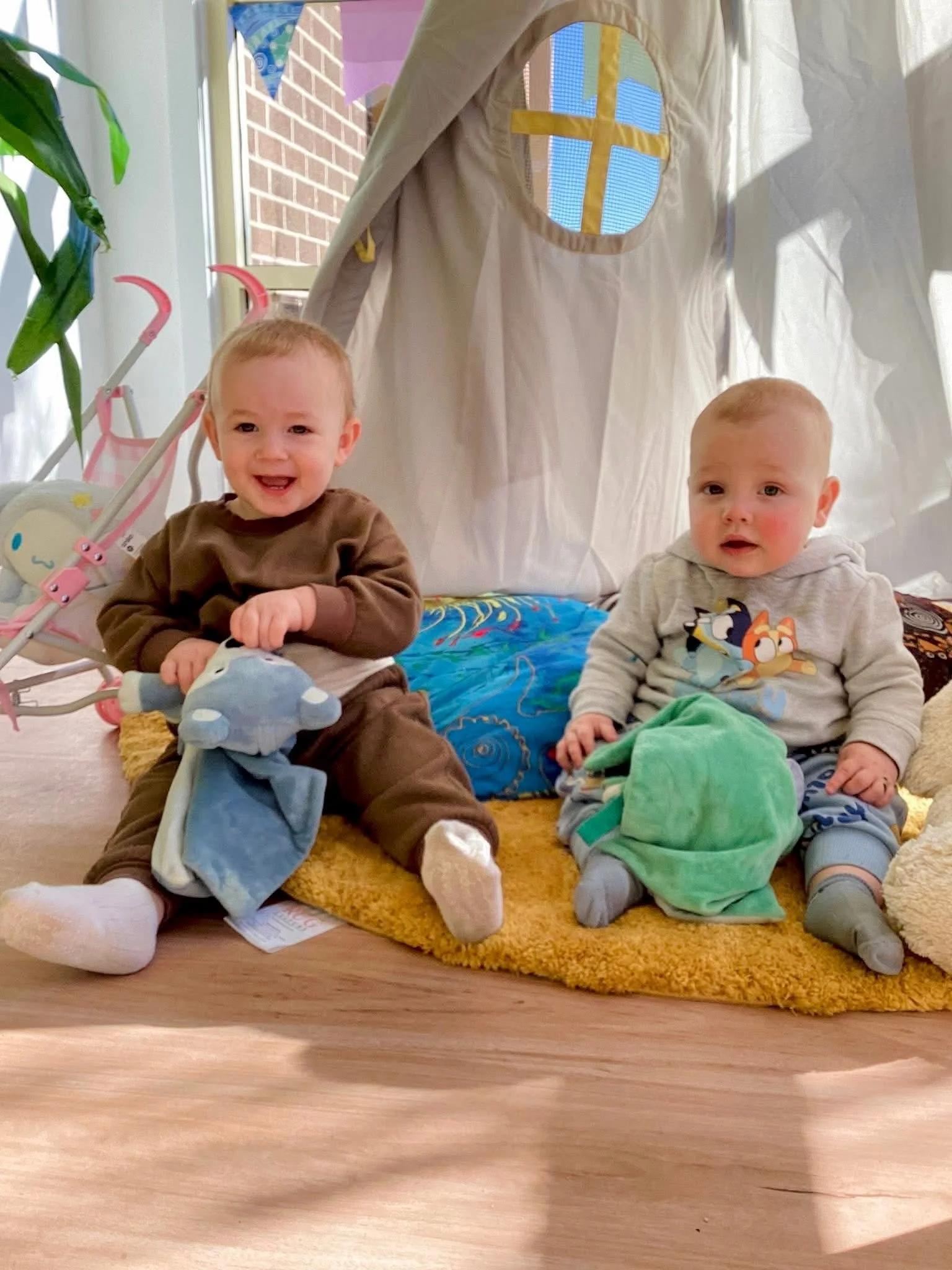
For our babies and young toddlers, emotional learning begins with relationships. In our Tiny Wanderers room, educators focus on warm, responsive interactions, simple group experiences, songs and stories that help children feel secure and connected. Babies explore alongside one another, practise early social interactions and build trusting relationships with the adults who care for them every day.
These moments may look simple, but a strong sense of belonging is one of the most important foundations a child can have. It is what allows a baby to crawl off and explore, knowing their educator is right there when they need comfort.
Our Little Explorers build on this foundation. As toddlers start to play alongside and then with each other, educators help them find words for what they feel and what they need, whether that is "my turn", "I'm sad" or "can I play?". These early phrases are the building blocks of friendship, and toddlers practise them many times a day.
Kindness, Communication and R U OK? Day
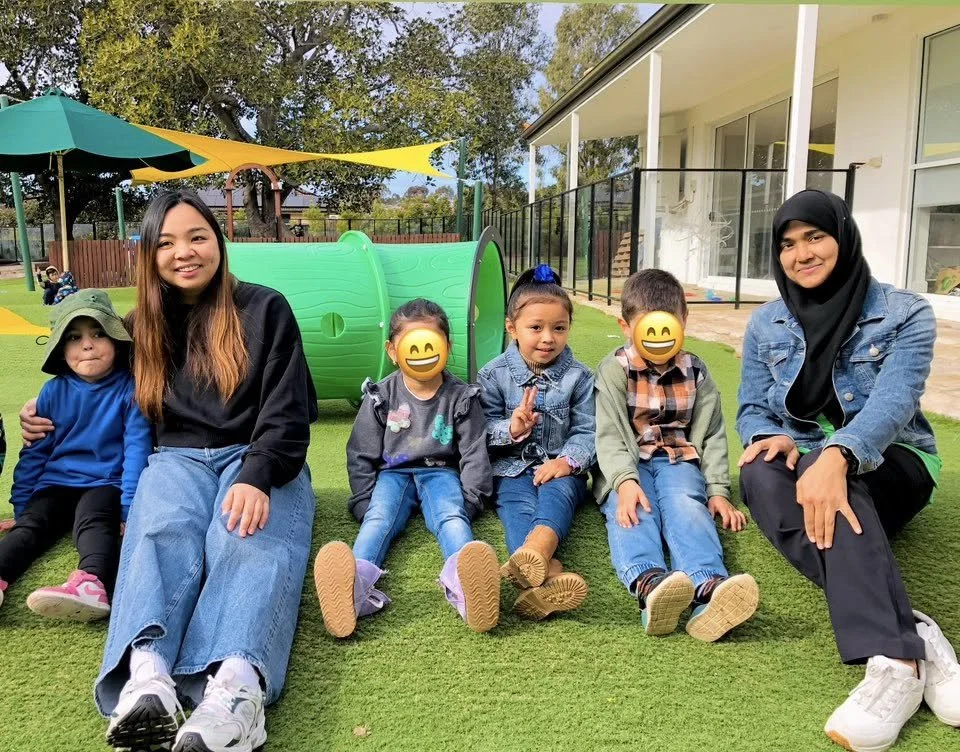
As children grow, so does their understanding of feelings. Around R U OK? Day and World Mental Health Day, our older children talk about what it means to check in with friends, listen to each other and show that we care. These conversations are pitched at a level young children understand, focusing on kindness, friendship and noticing when someone needs a hand.
Our School Readiness children have also been learning sign language, practising different signs and using them during interactions with educators and friends. Beyond the fun of learning something new, this teaches an important lesson: there are many different ways to communicate and connect, and everyone deserves to be understood.
Celebrations add to this too. When our children made handmade gifts for Father's Day, they put real care and effort into creating something special for the important people in their lives, and were bursting with excitement to take them home.
Confidence Through Imaginative Play
Emotional growth also shows up in play. During Superhero Week, children across every room dressed up in colourful costumes, talked about their special powers and created superhero stories together. Our Preschool 4-5 children worked together during imaginative play, sharing ideas and taking turns to lead.
Pretend play gives children a safe space to try on big feelings, be brave, solve problems and practise working as a team. It is no surprise that children often walk a little taller after a morning as a superhero.
Our educators watch closely during this kind of play. When disagreements happen, as they always do, they help children pause, listen to each other and find a fair solution. Learning to manage those small conflicts in a supportive setting is one of the best preparations for the social side of starting school.
Simple Ways to Support Feelings at Home
Ask "how did you feel today?" alongside "what did you do today?"
Name feelings in picture books and favourite shows.
Learn a few simple signs together, like "thank you", "more" and "friend".
Notice and celebrate kind moments, however small.
Keep goodbyes calm and consistent so your child knows what to expect.
Helping Every Child Feel at Home
When children feel safe and understood, everything else follows. If you would like to see how we nurture wellbeing and belonging at Redfern Cottage, get in touch with our team to book a tour of our Minto centre.