Safe Hands and Big Ideas: How Redfern Cottage Teaches Children About Safety
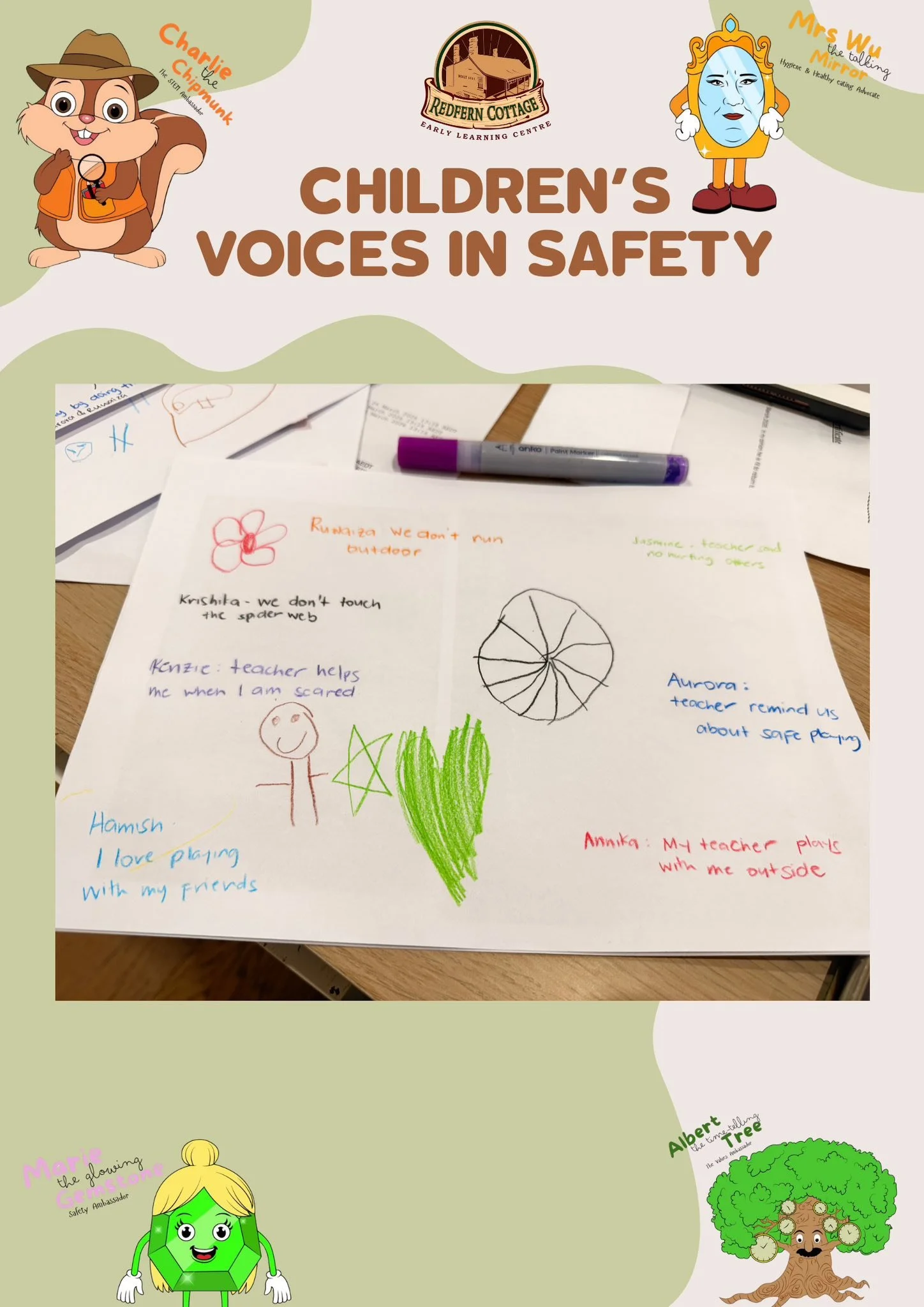
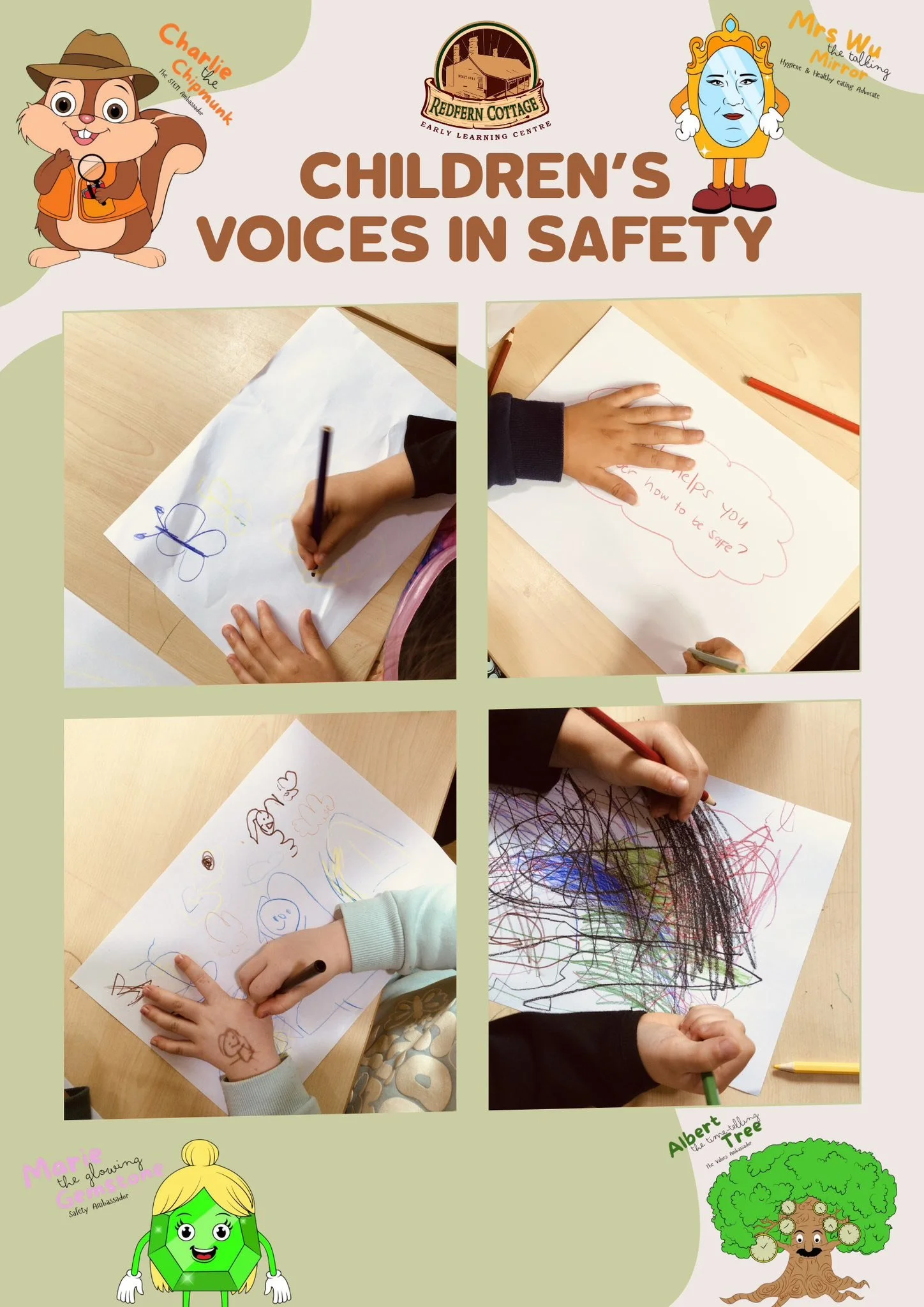
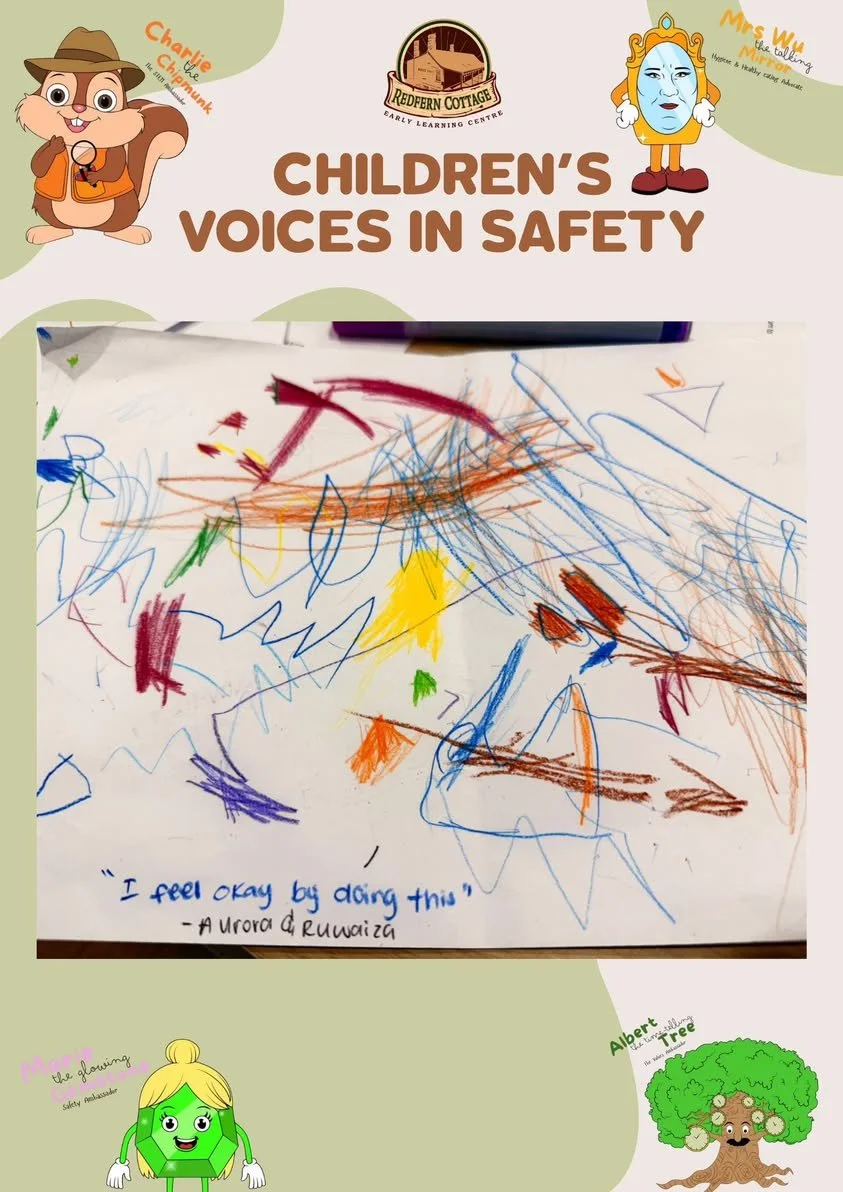
Safety education for young children is sometimes misunderstood as supervision. Keep an eye on them, make sure they don't hurt themselves, intervene when something goes wrong. Supervision matters enormously, but it's only part of the picture. The other part, the part that builds lasting capacity, is helping children develop their own understanding of what is safe and unsafe, and giving them a voice to express and act on that understanding.
This is the work that educators at Redfern Cottage have been doing as part of their focus on National Quality Area 2 (Children's Health and Safety), and it's worth understanding why it matters so much.
Conversations and Visual Prompts: Making Safety Tangible
Abstract concepts become concrete for young children through conversation and visual representation. The Redfern Cottage team has been supporting children to understand safety through simple discussions and visual prompts, building shared language around three core ideas: using safe hands, being kind, and showing respect.
These aren't just rules. They are frameworks that children can apply across a wide range of situations, from navigating a disagreement with a friend to understanding what to do when something feels wrong. When children have language for safety concepts, they can think about them, talk about them, and act on them in ways that children without that language simply cannot.
Giving Children a Voice
One of the most important shifts in thinking about children's safety over the past decade has been the recognition that empowerment is more protective than restriction. Children who understand what safe and unsafe behaviour looks and feels like, who have been given language to describe their experiences, and who feel confident that their voices will be heard and taken seriously, are children who are more able to keep themselves safe and to seek help when they need it.
At Redfern Cottage, safety education is not delivered to children; it is developed with them. Educators ask questions, invite reflection, and create space for children to contribute their own understanding. The result is children who don't just follow safety rules but begin to understand and own them.
The National Quality Framework and Child Safety
Australia's National Quality Framework places children's health and safety in Quality Area 2, recognising it as a foundational element of quality early childhood education. Meeting the standards in this area requires more than policies and procedures; it requires a genuine culture of safety that permeates everyday practice. The work happening at Redfern Cottage reflects exactly this kind of culture: safety as a daily conversation, not a compliance exercise.
A Safe and Supportive Place to Grow
If you're looking for a childcare centre in Redfern where your child will be not just supervised but genuinely supported to understand and navigate their world safely, Redfern Cottage is committed to that work.
Book a tour or enquire about enrolment at Redfern Cottage today.